 Home
Home Congress Info
 Programme
Scientific workshops are reshaping how people learn, explore, and engage with complex ideas across every level of education. Rather than sitting through passive lectures, participants step into hands-on environments where curiosity drives the entire experience. These immersive sessions blend theory with practice, making abstract concepts tangible and memorable. Whether you are a student, educator, or professional researcher, scientific workshops offer a structured yet dynamic space to build real skills, ask bold questions, and collaborate with others who share the same drive for discovery.
How scientific workshops redefine modern learning
The shift from traditional classroom instruction to experiential formats has been one of the most significant changes in scientific education over the past decade. Scientific workshops sit at the center of this transformation, offering participants a chance to engage directly with materials, data, and problems rather than simply reading about them. This direct engagement accelerates understanding in ways that passive study simply cannot replicate.

The role of hands-on experimentation in discovery
Scientific workshops thrive because they place experimentation at the core of the learning process, not as an optional add-on but as the primary method of inquiry. When participants design an experiment, test a hypothesis, and observe outcomes in real time, the learning becomes deeply embedded in memory and practice. This approach mirrors the actual work of researchers, giving learners an authentic taste of scientific thinking from the very first session.
Collaborative problem solving builds critical skills
One of the defining features of well-structured scientific workshops is the emphasis on group problem solving, where participants must communicate clearly, divide responsibilities, and synthesize findings together. This collaborative model develops soft skills like negotiation, peer review, and constructive feedback, which are just as vital in a research career as technical knowledge. Teams working through a shared challenge often arrive at more creative solutions than individuals working in isolation.
Bridging theory and real-world application
Theory without context can feel abstract and disconnected, but scientific workshops are specifically designed to close that gap by grounding every concept in a practical scenario. Participants might analyze water quality samples, build simple circuit models, or simulate ecological systems, turning textbook principles into lived experience. This bridge between academic knowledge and real-world application is what makes these sessions so effective for long-term retention and professional readiness.
Scientific workshops across different fields of study
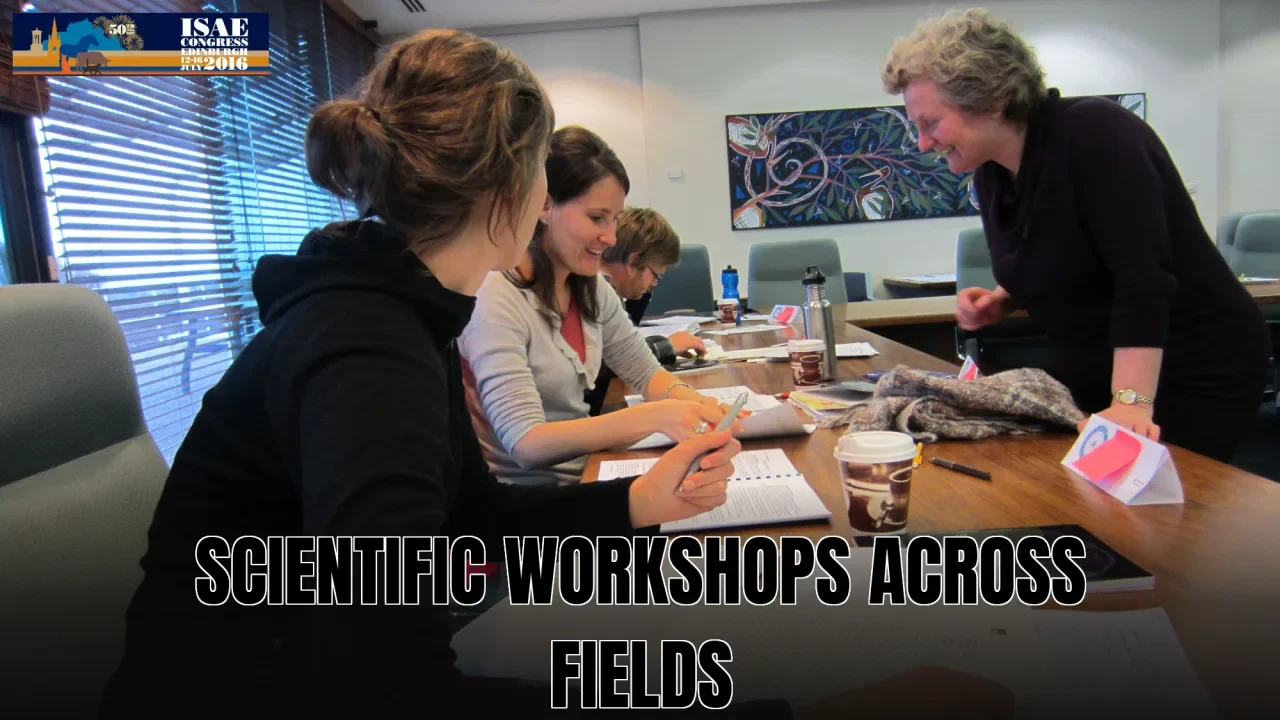
The versatility of the workshop format means it can be adapted to virtually any scientific discipline, from biology and chemistry to data science and environmental studies. Scientific workshops are no longer confined to university labs or elite research institutions; they are now a core feature of conferences, community education programs, and corporate training initiatives. Each discipline brings its own set of tools and methodologies, but the underlying philosophy of active inquiry remains constant.
Life sciences and biology-focused sessions
In the life sciences, scientific workshops often involve specimen observation, DNA extraction activities, or microbiology experiments that bring cellular processes to life outside the textbook. These sessions are particularly effective for medical students and early-career researchers who need to develop precision and patience alongside their theoretical foundations. Facilitators in this space typically design protocols that mimic genuine lab conditions, giving participants a realistic sense of what scientific fieldwork or bench research actually demands.
Physics and engineering design challenges
Physics-oriented scientific workshops frequently use design challenges to push participants toward creative engineering solutions, asking teams to build structures, test materials, or simulate mechanical systems within tight constraints. The constraint-based format encourages innovative thinking because it forces participants to work with limited resources and justify every decision they make. These sessions often reveal how closely physics principles connect to real engineering problems, inspiring many attendees to pursue further study in applied sciences.
Data science and computational thinking workshops
As data becomes central to nearly every scientific field, scientific workshops focused on computational thinking and data literacy are growing rapidly in both academic and professional settings. Participants learn to clean datasets, identify patterns, visualize results, and interpret statistical significance, all within a guided but exploratory environment. These sessions are especially valuable because they equip attendees with transferable skills that apply across disciplines, from climate modeling to genomics to public health research.
| Workshop type | Primary skill developed | Typical audience | Key activity format |
|---|---|---|---|
| Biology & life sciences | Lab precision and observation | Students, early researchers | Specimen analysis, extraction protocols |
| Physics & engineering | Design thinking and iteration | STEM students, engineers | Build-and-test challenges |
| Data science & computation | Analytical reasoning | Researchers, analysts | Dataset exploration, visualization |
| Environmental science | Systems thinking | Field scientists, educators | Ecosystem simulations, sampling |
| Chemistry & materials | Procedural accuracy | Lab technicians, undergraduates | Synthesis and testing sequences |
What makes scientific workshops truly effective
Not every workshop delivers the same impact, and understanding the factors that separate transformative sessions from forgettable ones is essential for both organizers and participants. Effective scientific workshops share a common set of design principles that prioritize clarity, engagement, and measurable outcomes. When these elements are aligned, participants leave not just informed but genuinely changed in how they approach problems.
Facilitator expertise shapes the entire experience
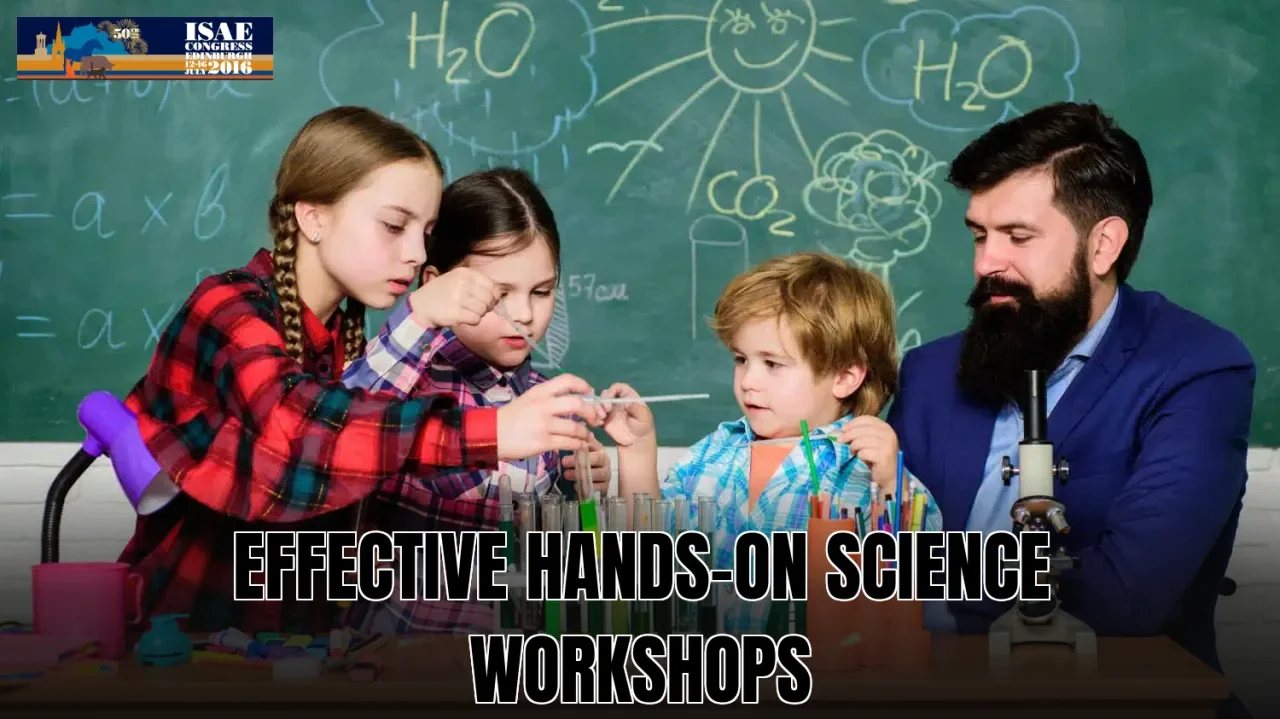
A skilled facilitator can transform even a modest set of materials into a rich learning environment, because the way questions are framed and feedback is delivered has an enormous impact on how deeply participants engage. In the best scientific workshops, facilitators act as guides rather than lecturers, nudging participants toward their own discoveries rather than simply delivering answers. This Socratic approach builds intellectual confidence and teaches participants to trust the process of inquiry itself.
Clear learning objectives keep sessions focused
Without clearly defined goals, even the most enthusiastic group can lose direction and momentum within the first hour of a session. Well-designed scientific workshops begin with explicit learning objectives that participants understand upfront, so every activity connects back to a specific skill or concept being developed. This transparency helps attendees self-assess their progress and gives facilitators a framework for adapting the session in real time based on group needs.
Feedback loops and reflection deepen understanding
The most impactful scientific workshops build structured reflection time into the session itself, rather than treating it as an optional debrief at the end. Whether through peer discussion, written observation logs, or facilitated group reviews, these feedback loops help participants consolidate what they have learned and identify gaps in their understanding before they leave. This metacognitive layer is what distinguishes a workshop from a simple activity, and it is often the detail that participants remember most vividly months later.
Conclusion
Scientific workshops represent one of the most powerful tools available for building genuine scientific literacy, practical capability, and collaborative confidence in any learner. They work because they respect natural human drive to explore, test, and understand through direct experience rather than passive absorption. If you are ready to take the next step in your scientific journey, visit isae2016.co.uk to discover upcoming events and resources designed to support your growth.
Xem thêm: Conference presentation tips for impactful event talks