
 Home
Home Congress Info
 Programme
The abstract review process is one of the most critical stages in academic publishing and conference submission. Whether you are a first-time researcher or an experienced scholar, understanding how reviewers evaluate your abstract can significantly improve your chances of acceptance. This guide breaks down each phase of the evaluation journey, offering practical insights into what selection committees look for, how scoring works, and what common mistakes to avoid. By mastering this process, researchers can present their work with greater clarity, precision, and impact in 2026 and beyond.
What Is The Abstract Review Process And Why It Matters
Before diving into the mechanics, it is important to understand the foundational purpose behind the abstract review process. At its core, this process serves as the primary filter through which conference organizers and journal editors identify high-quality research worthy of presentation or publication. Reviewers assess whether a submission aligns with the event’s scope, demonstrates methodological rigor, and contributes meaningfully to the field. Without a structured evaluation system, conferences would struggle to maintain academic integrity and relevance.

The Role Of Peer Reviewers In Evaluating Submissions
Peer reviewers are the backbone of any credible abstract review process. These are typically domain experts selected by program committees to provide unbiased, informed assessments of submitted work. Reviewers examine elements such as research objectives, methodology clarity, originality of findings, and relevance to the conference theme. Their feedback not only determines acceptance or rejection but also helps authors refine their work. A well-functioning peer review system ensures that only the most relevant and well-structured submissions advance to the next stage.
Key Evaluation Criteria Used By Selection Committees
Selection committees apply a standardized set of criteria during the abstract review process to maintain consistency and fairness. These criteria typically include the clarity of the research question, the strength of the methodology, the significance of expected outcomes, and the abstract’s overall readability. Some committees also factor in the novelty of the topic and its alignment with current academic discourse. Understanding these benchmarks allows authors to tailor their abstracts strategically, addressing each criterion before submission to maximize their evaluation score.
How Scoring Systems Work In Abstract Evaluation
Most conferences use numerical or categorical scoring rubrics during the abstract review process. Reviewers assign scores across multiple dimensions, which are then averaged or weighted to produce a final recommendation. Common scoring categories include scientific merit, methodological soundness, and presentation quality. Some systems also incorporate a confidence score, reflecting how familiar the reviewer is with the topic. These structured rubrics reduce subjectivity and help program chairs make data-informed decisions when curating the final conference program.
Stages Of The Abstract Review Process Explained
Understanding the sequential stages of the abstract review process helps researchers set realistic expectations and prepare their submissions accordingly. Most academic conferences and journals follow a multi-phase pipeline that begins at initial screening and ends with final editorial decisions. Each stage has distinct objectives and involves different stakeholders, from administrative staff to senior editorial board members. Knowing what happens at each phase allows authors to respond more effectively to reviewer feedback and revision requests.
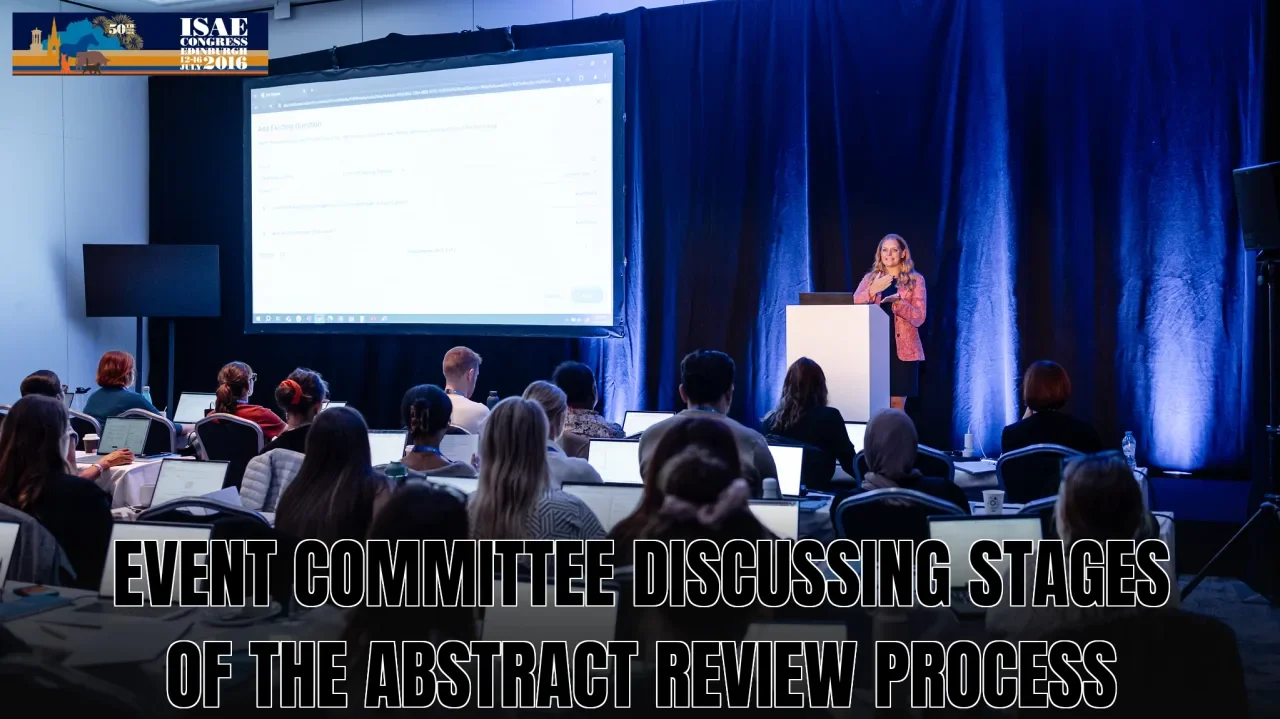
Initial Screening And Desk Rejection Criteria
The first stage of the abstract review process involves an administrative or editorial screening to check basic compliance. Submissions are evaluated for word count adherence, formatting requirements, topic relevance, and completeness of required fields. Abstracts that fail to meet these technical criteria are often desk-rejected before reaching peer reviewers. This initial filter saves reviewers’ time and ensures that only properly prepared submissions enter the formal evaluation pipeline. Authors should carefully review submission guidelines to avoid preventable rejections at this early stage.
Double-Blind Review And Anonymization Protocols
Many conferences adopt a double-blind format within the abstract review process, where both authors and reviewers remain anonymous to each other. This approach minimizes bias related to institutional affiliation, gender, or prior reputation. Authors must remove identifying information from their submissions, while reviewers are selected based on expertise and declared conflicts of interest. Anonymization protocols strengthen the integrity of the evaluation and promote equitable treatment of submissions from researchers at all career stages and institutional backgrounds.
Revision Rounds And Author Rebuttal Opportunities
After initial reviews, many programs allow authors to respond to reviewer comments through a rebuttal or revision phase within the abstract review process. This stage gives authors the opportunity to clarify misunderstandings, address methodological concerns, and strengthen weak sections of their abstract. Effective rebuttals are concise, professional, and directly responsive to each reviewer comment. Authors who engage constructively with feedback often improve their scores significantly. This iterative dialogue between authors and reviewers reflects best practices in scholarly communication and quality assurance.
Common Mistakes That Undermine Your Abstract Review Process Outcome
Even experienced researchers can make errors that negatively impact how their submission performs during the abstract review process. Awareness of these common pitfalls is the first step toward avoiding them. From vague research questions to poorly structured conclusions, small missteps can lead to lower scores or outright rejection. The table below summarizes the most frequent mistakes and their corresponding solutions, offering a practical reference for authors preparing their next submission.

| Common Mistake | Impact On Review | Recommended Solution |
|---|---|---|
| Vague or missing research question | Low scientific merit score | State the research problem clearly in the first sentence |
| Overclaiming results without evidence | Credibility concerns from reviewers | Use hedged language and reference preliminary data |
| Exceeding word count limits | Desk rejection before peer review | Edit ruthlessly; prioritize key information |
| Ignoring formatting guidelines | Immediate disqualification | Review submission instructions multiple times |
| Lack of methodological clarity | Poor methodology score | Briefly describe the research design and data sources |
How Weak Structure Affects Abstract Review Process Scores
A poorly structured abstract can confuse reviewers and dilute the perceived quality of the research. During the abstract review process, reviewers expect a logical flow that moves from background and problem statement to methodology, findings, and conclusion. When this structure is missing or inconsistent, reviewers may question the author’s analytical capabilities. Clear paragraph organization, precise language, and a coherent narrative arc are not optional — they are fundamental to achieving a competitive score in any rigorous evaluation framework.
Misalignment With Conference Themes And Scope
One of the most avoidable reasons for rejection in the abstract review process is submitting to a conference whose scope does not match the research topic. Reviewers are specifically chosen for their expertise in defined subject areas, and an off-topic submission signals a lack of due diligence. Authors should thoroughly read the call for papers, review previously accepted abstracts, and align their submission with the event’s stated themes. Strategic topic alignment not only improves acceptance rates but also ensures the research reaches the most relevant academic audience.
Neglecting Language Quality And Proofreading
Language errors, grammatical inconsistencies, and unclear phrasing can significantly damage a submission’s performance during the abstract review process. Reviewers may interpret poor writing as a reflection of unclear thinking or insufficient preparation. Authors writing in a second language should consider professional editing services or peer proofreading before submission. Key areas to review include:
- Subject-verb agreement and tense consistency throughout the abstract
- Precise use of technical terminology relevant to the field
- Elimination of redundant phrases and filler language
- Logical transitions between background, method, and conclusion sections
- Compliance with citation and reference formatting requirements
Conclusion
Mastering the abstract review process is essential for any researcher aiming to publish or present in competitive academic venues in 2026. From understanding peer reviewer expectations to navigating multi-stage evaluation pipelines, each element of this process demands careful preparation and strategic thinking. By avoiding common mistakes, aligning with conference themes, and presenting research with clarity and rigor, authors can dramatically improve their acceptance outcomes. Visit ISAE 2016 to explore resources, submission guidelines, and expert support designed to help researchers succeed at every stage of the academic submission journey.
Xem thêm: Abstract Submission Tips for Strong Research Entries 16