
 Home
Home Congress Info
 Programme
Scientific manuscript preparation turns raw research into a paper reviewers can assess quickly. A strong article needs one central question, four IMRAD sections, two to four visuals, and three revision rounds. Authors should make every paragraph deliver evidence rather than decoration. When claims, methods, numbers, citations, and journal rules support one message, the draft becomes clearer and easier to defend.
Scientific manuscript preparation through IMRAD structure
IMRAD gives a paper four connected sections: Introduction, Methods, Results, and Discussion. For a 5,000 word article, authors may use 700 words for Introduction, 1,200 for Methods, 1,200 for Results, and 1,400 for Discussion. This balance keeps background, procedure, evidence, and interpretation in proportion. A clear outline helps coauthors review faster because every section has a defined role.

Scientific manuscript preparation for the Introduction
The Introduction should guide readers from field context to missing knowledge and then to the study objective. A strong opening may use three recent facts, two unresolved issues, and one direct research question. Avoid adding ten unrelated studies when five precise sources can explain the gap. The final paragraph should state the aim, population, setting, or hypothesis in terms that match the later sections.
Detailed Methods that make research reproducible
Methods should allow another qualified researcher to repeat the study with minimal guessing. In scientific manuscript preparation, this section should report design, location, sample size, recruitment period, inclusion criteria, instruments, variables, software, and thresholds. A survey study may state 184 participants, a 72% response rate, a 95% confidence level, and analysis in R 4.3. Ethics approval, consent procedure, missing data rules, and exclusion numbers should appear clearly because reviewers check them early.
Results and Discussion with evidence driven logic
Results should show what the data revealed, while Discussion should explain why those findings matter. During scientific manuscript preparation, authors should report direction, magnitude, uncertainty, and relevance instead of repeating every table value. A compact Results section may contain two to four tables, one to three figures, and short text for major patterns. Discussion can compare findings with five to eight studies, explain contradictions, define practical value, and acknowledge limits.
Title and Abstract that improve first impressions
The Title and Abstract are often read first by editors, reviewers, and database users. Effective scientific manuscript preparation treats them as compressed versions of the whole study, not decorative summaries. A strong title often has 10 to 15 words and names the population, method, material, or main outcome. An abstract of 200 to 300 words should include background, objective, methods, main numeric result, and conclusion.
Final checks and quality control before submission
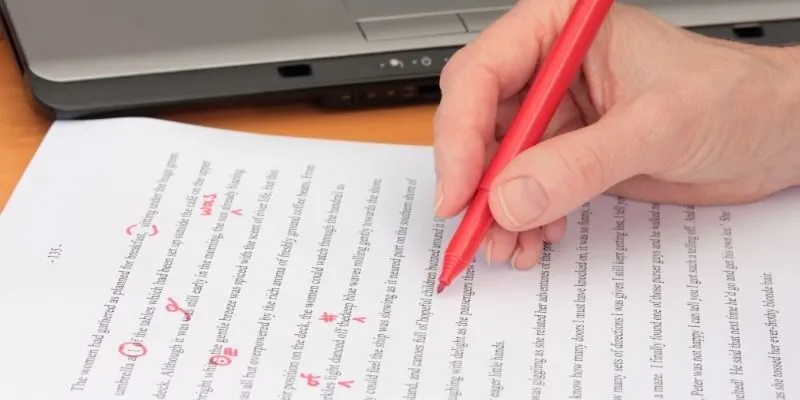
After a full draft exists, authors should move through at least three quality rounds. Round one checks scientific logic, round two checks language and citations, and round three checks journal formatting. In scientific manuscript preparation, staged review helps because sentence polishing cannot repair a weak research argument. A complete package should include manuscript file, title page, figures, tables, supplementary data, funding note, conflict statement, author roles, and cover letter.
Citation accuracy and reference list discipline
References should prove that the paper stands on current, relevant, and traceable evidence. In scientific manuscript preparation, every citation should support a claim, definition, method choice, comparison, or interpretation. An original article may use 30 to 60 references, while a systematic review can require 80 to 150 sources. Authors should verify names, year, journal title, DOI, volume, issue, page range, and reference style.
Plagiarism screening and scientific language control
Originality means more than avoiding copied sentences because duplicated structure can also weaken trust. Careful scientific manuscript preparation includes checking similarity reports, repeated phrases, recycled tables, overlapping methods, and uncited conceptual borrowing. A similarity score below 15% can still be risky if overlap appears in the Introduction, Discussion, or unique interpretation. Scientific wording should use precise verbs, measured claims, consistent terms, and active structure when it improves clarity.
Target journal selection and format alignment
Journal choice should begin before final formatting because scope mismatch creates avoidable rejection. A practical scientific manuscript preparation plan compares five journals by audience, article type, indexing status, word limit, figure rules, fees, and review time. Authors can choose one primary journal and two backup options before final revision. Formatting should follow abstract structure, heading level, title page order, reference style, table notes, figure resolution, reporting guideline, and data rule.
Author contribution and ethical declaration review
Author information should be checked before submission because mistakes can create conflict after acceptance. Each contributor needs a clear role, such as conceptualization, data curation, formal analysis, writing, supervision, or funding acquisition. The corresponding author should confirm email addresses, affiliations, ORCID details, consent statements, and conflict declarations in one final review. This step also helps the team avoid authorship disputes, missing acknowledgments, and incomplete ethical records.
Common mistakes to avoid when writing a research manuscript
The most common mistake is writing long sections before the argument is clear. A paper may reach 20 pages, yet reviewers still cannot identify the gap, sample logic, main outcome, or contribution. Good scientific manuscript preparation reduces that risk by forcing authors to build a one page paper map before drafting. That map should include objective, design, dataset, primary outcome, secondary outcomes, limitations, and exact value added.

Another mistake is mixing Results and Discussion too early in the writing process. When authors interpret every number immediately, evidence and opinion become difficult to separate. Weak drafts also overuse broad words such as important, innovative, robust, and comprehensive without measurable support. Stronger wording uses details such as 12 month follow up, 31% improvement, 0.82 reliability coefficient, or a validated seven item scale.
>>> Read More: Scientific publications for academic impact today
Conclusion
Scientific manuscript preparation is a controlled writing process that turns evidence into a readable, verifiable, and journal ready article. Strong authors do not rely on elegant language alone; they build reproducible methods, transparent results, cautious interpretation, and clean compliance. Standards such as a 200 to 300 word abstract, 30 to 60 references, three revision rounds, and five journal comparisons make the workflow easier to manage. The goal ISAE 2016 is a paper that lets reviewers focus on contribution instead of unclear structure, missing details, or technical errors.